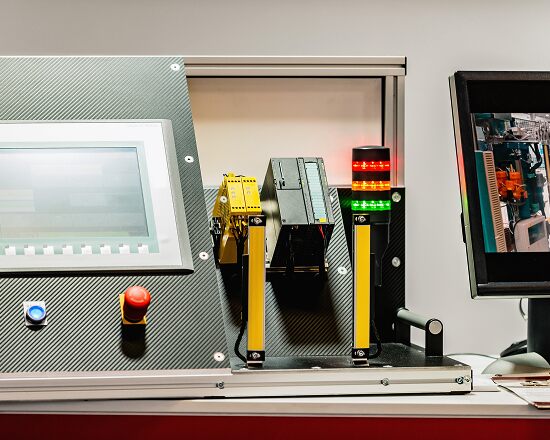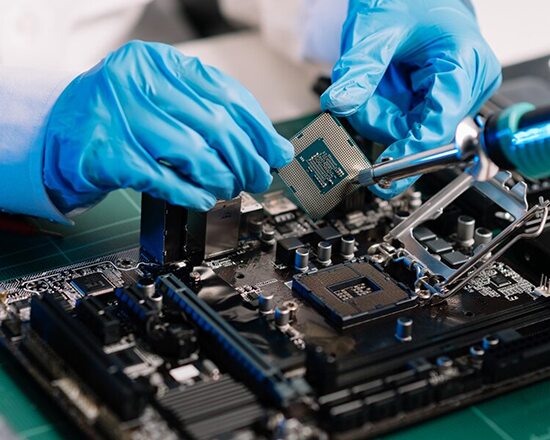

According to MarketsandMarkets, the global industrial PC market is valued at around $5 billion today and is projected to reach $6.6 billion by 2028, with growth driven by automation demand, IoT integration, and the adoption of edge computing.
For most of the last 40 years, the benchmark for a good industrial PC was simple: survive the environment. Handle the dust, the vibration, the temperature swings, the moisture. Keep running where a standard desktop would fail within weeks. That was enough.
It is no longer enough.
The engineers and procurement professionals specifying hardware today are asking a different set of questions. They need machines that can run AI workloads locally, bridge operational technology with enterprise IT systems, and stay in service for a decade or more without becoming obsolete.
Three forces are reshaping what industrial computing means, and understanding them is essential before you write a single line in your next hardware specification.
Edge AI Is Changing What We Expect From Industrial Hardware
The shift from cloud to local inference
For years, the assumed architecture for industrial AI was straightforward: collect data at the machine, send it to the cloud, process it centrally, act on the result. That works well enough when connectivity is reliable, latency is tolerable, and the decisions being made are not time-critical.
On a real factory floor, or at a remote infrastructure site, none of those conditions reliably hold. A machine vision system inspecting components at speed cannot wait for a round-trip to a cloud server. A turbine monitoring platform in a remote location cannot depend on a cellular connection staying up. A safety-critical control system cannot introduce unpredictable latency into its response loop.
The result is a growing demand for on-device inference, processing AI workloads directly on the hardware at the point of data generation. This shift reflects a fundamental change in how enterprises process and act on data, moving intelligence closer to the source to enable real-time decision-making, lower latency, and data sovereignty.
What this means for hardware specification
For hardware specifiers, this means the capability checklist has changed. Running AI workloads locally puts demands on hardware that did not exist ten years ago. GPU capability, or at minimum a dedicated neural processing unit (NPU), is increasingly a specification requirement rather than a nice-to-have. So is the ability to do this without active cooling.
Fans are already a reliability liability in industrial environments. Add the heat load of continuous inference workloads and the argument for fanless, sealed design becomes even stronger. DSL’s range of industrial PCs includes multiple fanless configurations built to handle sustained compute loads in exactly these conditions, with IP ratings that make them suitable for environments where dust, moisture, and temperature variation are facts of life.
The demand for factory floor edge AI computing is forecast to grow steadily through 2031 and beyond, driven by the adoption of machine vision, predictive maintenance, robotics control, quality inspection, and safety monitoring across automotive, electronics, and general manufacturing.
This is not a future trend. It is already shaping purchasing decisions.
IT and OT Are Converging, and the Industrial PC Is in the Middle
The widening role of operational technology
Operational technology (OT) and information technology (IT) have historically operated as separate domains. OT systems ran production lines, monitored equipment, and controlled physical processes. IT systems handled business data, enterprise software, and network infrastructure. The two worlds had different teams, different priorities, and often incompatible protocols.
That divide is closing. Manufacturers are investing in digital twins, predictive maintenance platforms, and integrated MES and ERP systems that pull live data from the production floor directly into enterprise decision-making. The industrial PC sitting on the factory floor or in the control cabinet is now expected to serve both masters.
On one side, it runs SCADA systems, manages PLCs, handles real-time process control, and interfaces with sensors and actuators via industrial protocols such as Modbus, PROFINET, and OPC-UA.
On the other, it feeds structured data up into enterprise analytics platforms, supports remote monitoring and management, and must comply with network security policies that IT departments are increasingly applying to OT environments.
Cybersecurity and compliance in an integrated environment
Bringing IT and OT together creates real security challenges. OT systems that were once physically isolated, and therefore considered inherently secure, are now networked. Vulnerabilities that would once have been contained to an office network can, in a poorly managed environment, propagate to production systems.
Standards such as IEC 61508 (functional safety for electrical and electronic systems) and ISO 13849 (safety of machinery control systems) define frameworks for managing risk in industrial environments. As the IT and OT boundary blurs, the hardware and software sitting at that intersection needs to be specified with these frameworks in mind.
This is not just a technical question. It is a question of provenance and accountability. Knowing your supplier has a documented quality management system, and has maintained it for decades, matters when you are specifying hardware for a safety-critical or regulated application.
DSL has held ISO 9001:2015 accreditation since 1995. It is evidence of a consistent, audited approach to quality management across more than 30 years of supplying industrial computing solutions.
The IoT and machine vision applications that sit at this IT/OT boundary are now a defined sector in DSL’s application portfolio, precisely because the requirements go beyond hardware specification into systems integration, protocol compatibility, and long-term support.
Longevity As a Specification Requirement
The hidden cost of short-cycle hardware
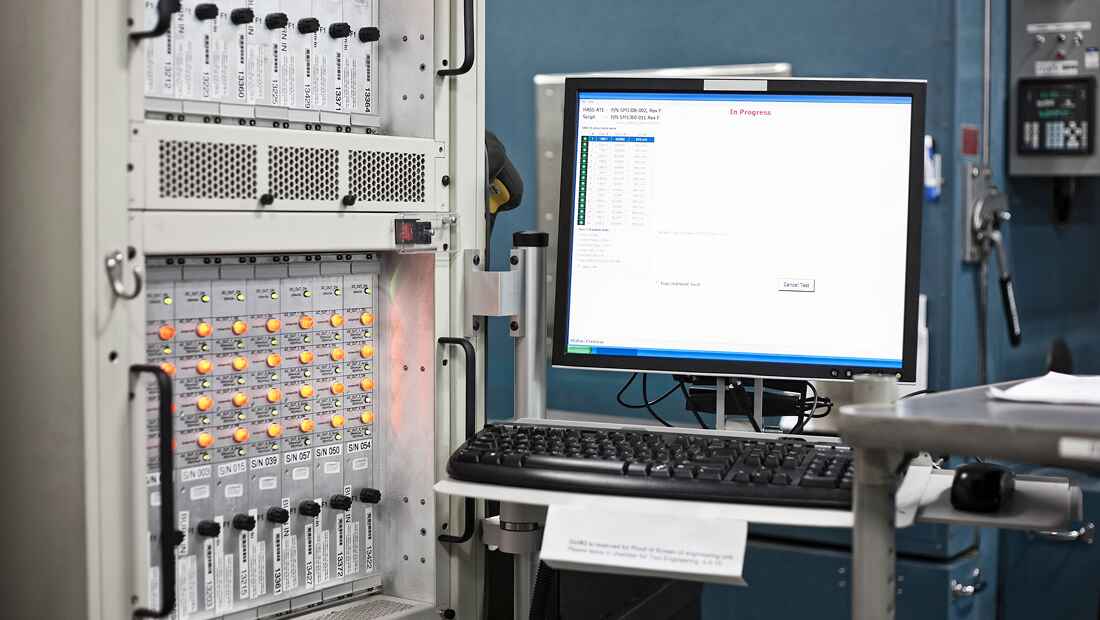
Consumer-grade hardware has a lifecycle measured in years. Manufacturers update chipsets, discontinue components, and move to new platforms on roughly two to three year cycles. For a home user or an office environment, that is tolerable. For an industrial deployment, it can be a serious operational problem.
Industrial systems are often embedded into equipment, production lines, or infrastructure that has its own lifecycle, and that lifecycle is measured in decades, not years. A machine tool controller, a process management interface, or an edge analytics node may need to remain in service for 10, 15, or 20 years. When the underlying hardware reaches end-of-life after five, finding a compatible replacement that does not require re-engineering, re-validation, or re-certification is expensive and disruptive.
Approximately 42% of new industrial PC installations globally in 2024 were directly tied to Industry 4.0 modernisation efforts, a proportion expected to rise during the forecast period to 2031. Many of these are greenfield deployments where the hardware selected today will be expected to support AI workloads five or ten years from now. Specifying on current requirements alone is a false economy.
What genuine longevity looks like in practice
DSL has hardware deployed in industrial environments that has been running for over 30 years. That is not an accident of circumstance. It reflects a deliberate approach to product selection, component quality, and supply chain management.
The 5-year warranty standard across DSL’s industrial computing range is a direct expression of that philosophy. It is backed by the company’s technical support team, who provide pre- and post-sale engineering support at no additional cost for the duration of the project. The support model is designed for the reality of industrial deployments, not the assumptions of a consumer electronics business.
It is also worth understanding the risk that comes with using hobbyist or educational single-board computers in long-term industrial deployments.
Platforms such as Raspberry Pi carry explicit manufacturer warnings against use in commercial products, citing the risk of hardware revisions and supply discontinuity. For applications requiring longevity and continuity of supply, purpose-built industrial single board computers are the appropriate choice.
Matching Hardware to the Environment, Not Just Today’s Requirements
The right form factor for the right deployment
Not every industrial AI deployment looks the same. A machine vision station on a food processing line has different requirements to a predictive maintenance node in an oil and gas facility, which has different requirements again to an edge analytics server in a telecoms cabinet.
Panel PCs are often the right choice where an operator interface is needed alongside compute, combining touchscreen HMI with the processing power to handle local analytics. IP ratings from IP65 to IP69K make them appropriate for environments ranging from light dust through to high-pressure washdown.
Industrial PCs in fanless box or embedded configurations suit applications where compute is needed without an integrated display, edge gateways, data aggregators, machine controllers, and AI inference nodes. The fanless design removes the component most likely to cause an unplanned failure, which matters significantly when you are calculating the true cost of downtime.
Machine vision systems represent a more specialised deployment category, where camera integration, PoE connectivity, and high-speed image processing all need to be accounted for in the hardware specification. Getting this wrong at the specification stage creates integration problems that are expensive to resolve once a system is in production.
The factory automation application page on the DSL Industrial Computing website gives a useful overview of how these different form factors map to real deployment scenarios.
Why This All Points to the Same Conclusion
The industrial PC market is growing because the demands placed on industrial hardware are growing. Edge AI inference, IT/OT convergence, and long deployment lifecycles are not separate trends. They are interconnected pressures that collectively redefine what a capable industrial PC needs to do.
Hardware that was specified purely on environmental durability five years ago may not be adequate for the workloads of the next five. The decision made at the point of hardware selection has consequences that extend well beyond initial commissioning.
If you are specifying hardware for a project that needs to last, and where getting it wrong carries real operational and commercial risk, the sensible approach is to talk to someone who has been doing this since 1985.