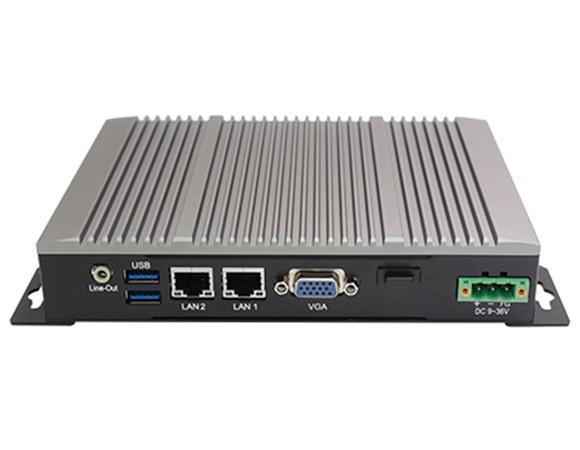
 Industrial PCs are computers designed for use in industrial environments. They’re used across manufacturing, transportation, energy, healthcare and other sectors where a standard PC would fail. This guide explains what makes a PC “industrial,” and where they’re used.
Browse our full range of Industrial PCs here →
What Exactly is an Industrial PC?
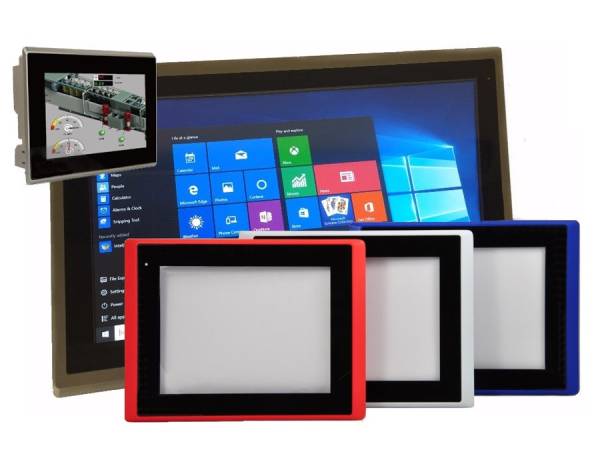
An industrial PC (IPC) is a computer built for industrial use. That means it can operate across a wider temperature range than a standard PC, has enhanced durability, and often includes features built for specific industrial applications such as process control and data acquisition.
They’re designed for easy integration into larger systems, and to keep running in conditions that would put most standard PCs out of action within weeks.
What Makes Them Different from a Standard PC?
Industrial computers are built to withstand extreme temperatures, shock, vibration, dust and electromagnetic interference. Enclosures are often sealed against liquids and contaminants, and construction is generally more robust throughout.
They also tend to use more powerful, longer-life components than commercial PCs, and typically have a longer working lifespan overall, often with an extended warranty and support included. Many offer expanded I/O and communication options to support industrial automation needs.
If you’re specifying a system and want to talk through which industrial PC fits your application, our team can help – call 01462 374102 or email sales@dsl-industrialcomputing.co.uk.
What Industries are Industrial Computers Used in?
IPCs are used in various industries including, amongst others, manufacturing, food and beverage processing, healthcare, automotive, aerospace, and defence. They’re designed to withstand harsh environments and meet the demanding needs of these industries.
Manufacturing Industry
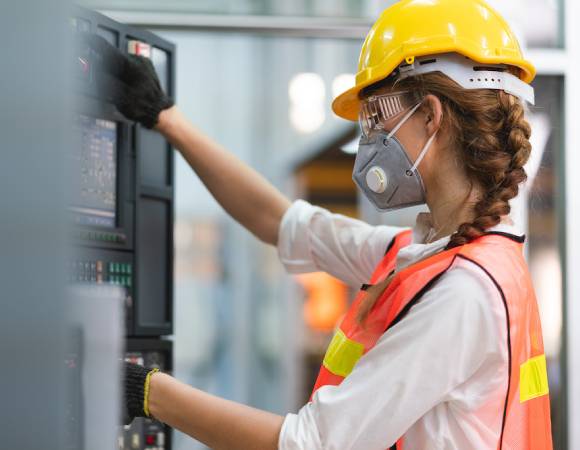
In today’s fast-paced world, manufacturers need equipment they can rely on to keep up with demand. That’s why industrial PCs are increasingly popular across the manufacturing process.
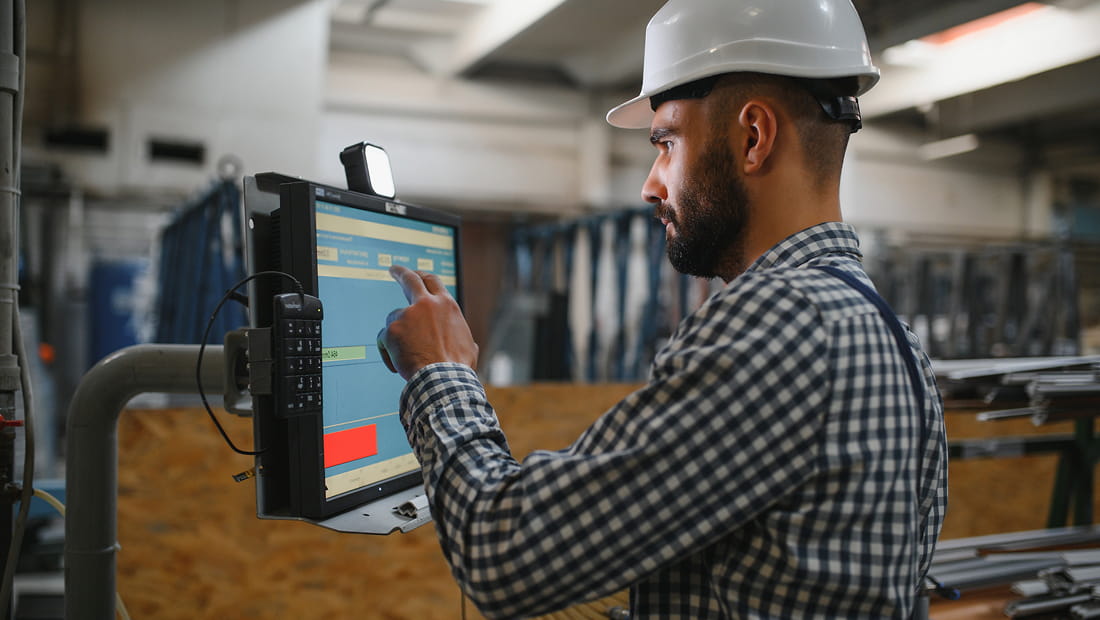
They’re used to control and monitor factory machinery and machine tools, keeping production lines moving smoothly, and to track inventory levels so raw materials are available when needed. They’re also used to run quality control tests on finished products, helping ensure only the best reach consumers.
By streamlining production and quality control, they help keep factories running efficiently, and support a higher degree of automation – playing a vital role in the manufacturing process as a result.
Built to withstand tough conditions and heavy use, this kind of system is ideal for factories and other industrial settings regardless of environmental factors, and typically lasts longer than a consumer PC, so it can be relied on for years to come. Many can also be configured to meet the specific needs of a manufacturing application, from hardware and software customisation through to enhanced security features. Browse our range of industrial PCs suited to manufacturing environments.
Food and Beverage Processing
Food and beverage processing involves a lot of machines and equipment, and time is of the essence – products need to be processed quickly and efficiently to meet consumer demand.
Equipped with powerful processors and large amounts of memory, these systems are well suited to high-speed data processing, and integrate easily into existing production lines to maximise efficiency. As demand for processed food and beverages continues to grow, they’ll play an increasingly important role in meeting it.
They’re also built to withstand the harsh environment of a factory floor, with sealed enclosures that protect against the dust and water ingress a washdown environment brings, while remaining easy to clean and hygienic without affecting performance.
Facilities often use them to track inventory and manage production schedules, with robust connectivity options for integration into existing systems, and the ability to run 24/7 to keep production lines moving around the clock. This allows manufacturers to track production in real time, adjust as needed, and even model the production process to identify bottlenecks – helping food and beverage processors reduce costs and improve efficiency while staying confident their equipment will keep running in demanding conditions.
Healthcare Environments
Designed for use in demanding environments, this type of system suits a wide range of healthcare applications, including medical devices and patient monitors, where reliability and safety are paramount.
They’re incredibly reliable and rugged, able to withstand harsh conditions while running 24/7 – critical in an industry where uptime matters. Many can withstand shocks and vibration, and are available with features like antimicrobial housings to help reduce the spread of infection. They also tend to be more affordable than commercial-grade equivalents, making them a cost-effective choice for everything from patient records management to medical equipment maintenance.
Many models can be equipped with medical-grade displays, touchscreens and other specialised peripherals, along with extensive data storage and security features – important in an industry that regularly handles sensitive patient information.
One particularly important use is medical imaging: X-rays, MRIs and CT scans all produce large amounts of data that need storing and processing, and mobile carts equipped this way let radiologists review images right at the bedside, saving valuable time in emergency situations. They’re also widely used in electronic medical records (EMRs), helping track a patient’s history, medications and allergies, and making it easier to share information across a care team when coordinating treatment.
Automotive Industry
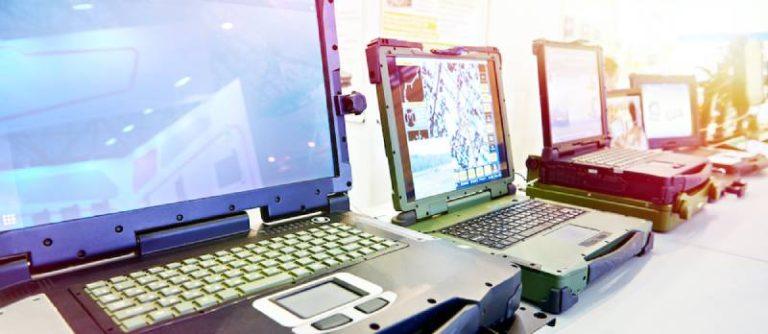
This type of system is well suited to the automotive industry, typically more durable than consumer-grade equipment thanks to dust-resistant enclosures and enhanced thermal management.
Higher-performing hardware supports applications that need serious computing power, such as design and simulation work, while a modular, scalable build makes integration into larger production systems easier. Many manufacturers also offer specialised software for automotive use, such as vehicle diagnostics and fleet management tools – all reasons this hardware is widely used for quality control and assembly line operations in the sector. See our industrial PC range for automotive-grade options.
Aerospace Industry
Purpose-built to withstand dust, temperature swings and vibration, this kind of hardware plays a critical role in mission-critical aerospace applications.
Aircraft flight data recorders, for example, rely on this equipment to store large amounts of data securely in a rugged environment, and it’s also widely used for engine control and navigation systems, where reliable computing power and accuracy are essential.
Typical uses include flight control (processing data and providing information to pilots), aircraft maintenance (tracking schedules and history), and communication systems managing contact between aircraft and ground crews – all relying on the same combination of reliability, processing power and flexibility.
Defence Sector
In defence, these systems support applications including command and control, logistics management and sensor data processing, valued for their ability to operate in extreme conditions, high level of ruggedisation, and flexible configurations.
They’re also used to connect disparate systems and process large amounts of data in real time – a role that will only grow as the sector becomes increasingly reliant on technology.
Across each of these industries, the same qualities apply: automation, reliability, durability and performance where it matters most. Whatever your industry, speak to DSL’s technical engineers for no-obligation advice, or view our full range of industrial PCs.